



Michał Podlewski: Some time ago, we spoke with mathematician Dr. Bartosz Naskręcki about how AI is changing mathematics. There is a widespread belief that biology may be the next field to undergo major changes. From your perspective, is AI already significantly changing the way work is done in this field, or is that still a thing of the future?
Joanna Krawczyk: Let's start with something that might seem obvious - biology is probably the most complex system we are trying to model with AI. From diagnostic tools to protein structure prediction to understanding cancer, it poses thousands of questions we are still trying to answer. At Ingenix, we look at AI in biology primarily through the lens of discovering and developing new therapies.
I believe we are at a genuinely fascinating moment - one full of both real progress and deep contradictions. AI is advancing at an extraordinary pace and has already transformed parts of biology. AlphaFold is perhaps the clearest example: it showed that machine learning could solve a problem that challenged structural biologists for decades.
But if we ask whether this progress is translating into better medicines, the picture becomes much more complicated. Despite steadily increasing R&D investment, the number of new therapies approved per billion dollars spent has been declining for years. We have more biological data than ever before, sequencing is cheaper than ever, and computing power continues to grow, yet we are not seeing a proportional increase in novel therapies reaching patients.
I don’t see this as a failure of AI. Rather, it highlights the limits of today’s approaches. AI performs best when problems are well defined and supported by abundant, high-quality data. That’s exactly what made AlphaFold possible: decades of high-quality experimental protein structures provided an exceptional training signal. Drug discovery is a fundamentally different challenge. That’s why, despite remarkable progress, I think we are still at the beginning of AI’s real impact on therapeutic discovery.
The founders of Ingenix, Piotr Surma and Adam Dancewicz, are experienced entrepreneurs who already have a successful AI startup under their belts. However, applying that experience to the complex world of biology is a challenge on an entirely different scale. What made you believe they would succeed this time as well, and what led you to join the team?
As a bioinformatician with a mathematical background, I always wanted to work at a place where I could combine my passion for biological data analysis with building machine learning models. For a long time, there simply wasn’t a place like that in Poland, so I was genuinely excited when I first heard about Ingenix.
Before joining the team, I was rather skeptical about buzzwords like “simulating clinical trials,” “virtual cells,” or “virtual twins.” My previous experience at a biotech company had shown me how easily these ambitious visions can run into practical challenges with biological data. What convinced me during my conversation with Piotr and Adam was their honesty. They said openly: “We don’t believe we’re going to solve all of biology, collect all the data, or build a single model that does everything.” But they were convinced that by bringing together an interdisciplinary team, we could make real, steady progress toward that goal. To me, that was far more convincing than another promise of a revolutionary breakthrough.
In my view, Ingenix stands on two strong pillars. The first is experienced founders who provide us with the best environment to work and grow. The second is an exceptional team of researchers, engineers, and bioinformaticians. It may sound cliché, but it’s genuinely a pleasure to work in a place like this. We’re a close-knit group of people who truly believe in the company’s mission and push each other to do better every day.
Ingenix is a startup that aims to change the way we use AI in biology and drug development. In your view, building a single large model will not bring about a breakthrough in these fields. Why do you think this is a dead end, and what, then, is your alternative?
This comes down to the nature of biology itself. Let’s start with the fact that biological systems are dynamic and nonlinear - small changes in inputs can lead to complex changes in outputs. A single point mutation, for instance, the substitution of one nucleotide at a so-called hotspot, can set off a chain of events that leads to cancer.
On top of that, biology is multi-scale. We can observe it at the level of DNA, RNA, proteins, single cells, tissues, or entire organisms. Each layer reveals a different slice of reality, and no single measurement gives you the full picture. To understand what’s actually happening inside a cell, you have to integrate information across multiple modalities at once.
And then there’s the most practical issue of all: biological data is far from ideal. Measurement technologies have real limitations - the data is noisy and highly variable across experiments. On top of that, biology is a field where the data tends to be “wide rather than deep”: we often measure the expression of tens of thousands of genes across only a few hundred samples, which poses a real challenge for classical machine learning methods.
Taken together, these challenges mean that biology requires very different AI architectures from those used in domains like text or images. The problem isn’t that today’s models are too small. It’s that we don’t yet have architectures designed for biology in the first place.
That’s why we don’t think the breakthrough will come from one single foundational model trying to learn everything at once. Models like that are great at reproducing biology they’ve already seen - but they struggle with what matters most to us: generalizing to new patients, combinations of mutations, or disease mechanisms.
At Ingenix, we’re going the opposite direction. We build specialized models, each tailored to a specific scale and data type, and then connect them into a Biological Reasoning Engine that can reason across all of those levels at once. I like to compare it to an interdisciplinary team of scientists - no single person knows all of biology, but a team that works well together can see far more than any one person could alone.
Over the past year, you’ve been working on a completely new AI architecture. What have you managed to build during that time?
Over the past year, we have been working on the first version of the Biological Reasoning Engine, which meant advancing on several fronts at once.
On the modeling side, we built specialized components to handle different types of data - from transcriptomic and molecular data to models predicting the effects of genetic perturbations or drug treatments. We treated each of these modalities as a distinct research problem, rather than simply reducing them to text.
Alongside that, we developed a reasoning layer and an agent system that draws on knowledge from the literature, patents, clinical trials, and quantitative experimental data, translating it into research hypotheses.
The first result that particularly excites us is early signs of zero-shot generalization in our models - the ability to reason in new biological contexts the models had not previously encountered. The second is the outcome of our latest internal hackathon, where we built a prototype of an autonomous, self-evolving bio-researcher. The question was straightforward: can the agent enter a completely new biological domain, given only a handful of examples from experts, and quickly learn to work effectively within it? The models developed during this project clearly outperformed publicly available solutions, both on external benchmarks and in our internal tests. This is the first strong evidence that it is possible to build systems that do not merely memorize biological patterns, but adapt to new biological contexts.
We describe some of our work in publications – if you're interested in the technical details, you can find them at https://ingenix.ai/evidence/, along with our blog posts:

In your press release, you wrote that the findings—which took the biotech company several years of research and cost millions of euros to develop—were generated by your AI in just a few minutes. Can you share more details on how that happened?
This was a very important moment for us because it was the first time we had the opportunity to test the Biological Reasoning Engine on a real-world research problem.
A biotech company came to us with a specific oncology question, a problem they had been investigating for several years. Our system generated a set of hypotheses based on the analysis of multiple biological modalities at once. It combined biomarker analyses across cell-line and patient-derived data with in vitro evidence, clinical results, and data spanning the molecular, cellular, and population levels. Collecting data, running the analyses, interpreting the results, and building the models - this process usually takes months. Our system performs the analysis within tens of minutes.
However, the real challenge is what happens next: synthesizing and prioritizing the hypotheses. Individual analyses can produce dozens of potential signals - the hard part is identifying which ones have the strongest biological rationale and are most worth pursuing.
That’s why validation was so important to us. The hypotheses that our system generated largely aligned with the directions the company had arrived at after years of its own research, some of which they had already confirmed experimentally. This gave us confidence that the Biological Reasoning Engine could significantly accelerate their research process and help them make key scientific decisions.
This does not mean that AI replaces biological experiments. However, it does show that it can narrow down the set of the most promising hypotheses in a very short time and help scientists make better decisions about which hypotheses are worth testing in the lab. As a result, even a small biotech company can iterate on not just a few hypotheses, but dozens of promising directions simultaneously.
Your flagship solution is the “Biological Reasoning Engine”. How does your AI “understand” biology? What does it take for artificial intelligence to truly understand biology?
I’d actually be careful with the word “understand” - it depends on what we mean by it. A model doesn’t understand biology simply because it has read millions of papers. To me, understanding means being able to connect different biological layers and explain how molecular events translate into cellular behavior and ultimately affect a disease process.
Most AI systems today are excellent at analyzing individual types of data: text, images, or biological sequences. However, when multiple models are combined, they are usually connected only at the level of their final outputs. Biology doesn’t work that way. The same biological process leaves signals across many levels at once: in the genome, gene expression, protein activity, cellular state, and ultimately in the patient’s condition. If we want to understand what is happening, we cannot analyze these layers independently.
Let’s take a concrete example: what happens if we give a specific compound to a patient with a particular cancer mutation? The answer does not come from the molecule’s structure, gene expression profile, or literature alone. The system needs to reason across all of these dimensions simultaneously, combining information about the compound, the state of the cell, active signaling pathways, and available experimental evidence, to build a mechanistic hypothesis explaining why we would expect a particular response.
This is why our approach does not combine models only at the level of their outputs. We integrate them earlier, at the level of their internal representations. Each specialist model remains an expert in its own domain, but reasoning happens across a shared map of relationships between biological modalities. For us, this learned map, the connections between different layers of biology, is the most valuable part of the system.
Transparency is equally important. From the beginning, we wanted to avoid building another black-box system that simply returns an answer. The system should make its reasoning transparent: which evidence it used, what biological mechanism it proposes, and where the limits of that hypothesis are.
Does that mean AI “understands” biology? I would be cautious about making that claim. I would say instead that it can reason across different biological scales and build coherent mechanistic explanations in a way that was previously extremely difficult, because no individual scientist can simultaneously integrate across so many sources of information and biological scales.
The internet has been the fuel for LLMs. What is the equivalent of the internet for biological AI? Laboratory data? Simulations? Experiments?
The shortest answer is: experimental data. But this is where the fundamental difference between biological AI and language models begins. The internet is vast, cheap, and easily accessible. Biological data is almost the exact opposite - every measurement requires an experiment, and experiments are expensive, time-consuming, and often affected by technical noise.
But the challenge is not simply having more data. It is having the right kind of data. For biological AI, the structure of the information matters enormously. We need heterogeneous data that capture causal relationships across processes and scales. A good example is perturbation experiments, where we deliberately change a biological system, for example, by treating a cell line with a drug or switching off a specific gene using CRISPR, and observe the consequences. There is a simple engineer’s principle behind this: if you want to understand how a system works, try to break it. Perturbations allow models to move beyond correlations and start learning causal relationships. Even more valuable are multimodal datasets that connect different biological scales within the same experiment: perturbations across different cell types and contexts, paired patient data before and after treatment, or multiomic profiles linked to therapeutic response. Today, we have very few publicly available datasets of this kind - and that is one of the biggest bottlenecks for progress.
Without better data, we risk falling into two intertwined traps. First, models become very good at reproducing the biology we already know. Second, the benchmarks that drive progress in the field often reward familiarity over discovery. Many public evaluation datasets focus on well-studied biological contexts, measuring how well models reproduce existing knowledge rather than their ability to uncover new biological mechanisms.
Do we really need dramatically more data? Not necessarily. The more important question is: what data is actually valuable for teaching models to reason about biology? We believe we need two things at the same time: more heterogeneous, causal datasets that capture how biological systems work, and rigorous benchmarks built through a collective effort across the community.
What does your day-to-day work with AI look like? In what tasks do you find AI indispensable, and where do you think it still can’t be trusted?
At Ingenix, AI is primarily a tool that accelerates our everyday work. I have to admit that the progress I’ve seen over the past year has been remarkable - especially when it comes to AI-assisted coding. Models now help me prototype ideas faster, explore the literature, and monitor computational experiments. As a result, I can spend more time on the actual research and less on repetitive tasks.
At the same time, there are areas where I remain deliberately cautious: especially data exploration, data preparation, and interpreting model outputs. In biology, the quality of the data we use to train and validate models is absolutely fundamental. If the underlying assumptions are flawed or the data quality is poor, even the most advanced model will simply produce more sophisticated errors.
The same applies to interpreting results. In machine learning, it is surprisingly easy to achieve impressive performance for the wrong reasons. The metrics may all look excellent: the loss is low, accuracy is high, and yet, when you look deeper, you discover that the model has learned a technical artifact rather than a real biological signal. This is where human judgment is still essential. You need to take a look at the results and ask the most important question: does this actually make biological sense?
Where do you think we’ll be in 5–10 years thanks to systems like yours? Will we reach a point where AI is not just a tool for researchers, but the primary author of discoveries? And what does that even mean for science as a human institution?
I’m not a big fan of speculating about the future - biology has taught me humility too many times for that. But I believe that at Ingenix, we have a vision worth fighting for.
Today, it takes more than a decade, on average, to go from identifying a promising drug candidate to clinical approval. That’s a decade during which patients are waiting for therapies that could potentially help them. I’d like to see AI shorten that timeline over the next 5–10 years, not by replacing scientists, but by accelerating every stage of the development process: generating and prioritizing hypotheses faster, designing better clinical trials, and detecting signals earlier that today get lost in the noise. That is precisely Ingenix’s mission: shortening the path from discovery to life-saving therapies.
As for whether AI will become the primary author of scientific discoveries, honestly, I don’t know. But I do know that if systems like ours help scientists ask better questions and test them faster, that will be a win for both science and patients. Tools can never replace curiosity, and curiosity is what drives discovery.
***
Joanna Krawczyk – Senior Bioinformatics Data Scientist at the Warsaw-based startup Ingenix, with professional experience spanning both academia and industry. She previously worked in Ewa Szczurek's interdisciplinary Computational Medicine laboratory at the University of Warsaw, as well as at the biotech company Ryvu Therapeutics.
***
Links:
LinkedIn Profile
OpenReview Profile
Ingenix Substack
Ingenix website
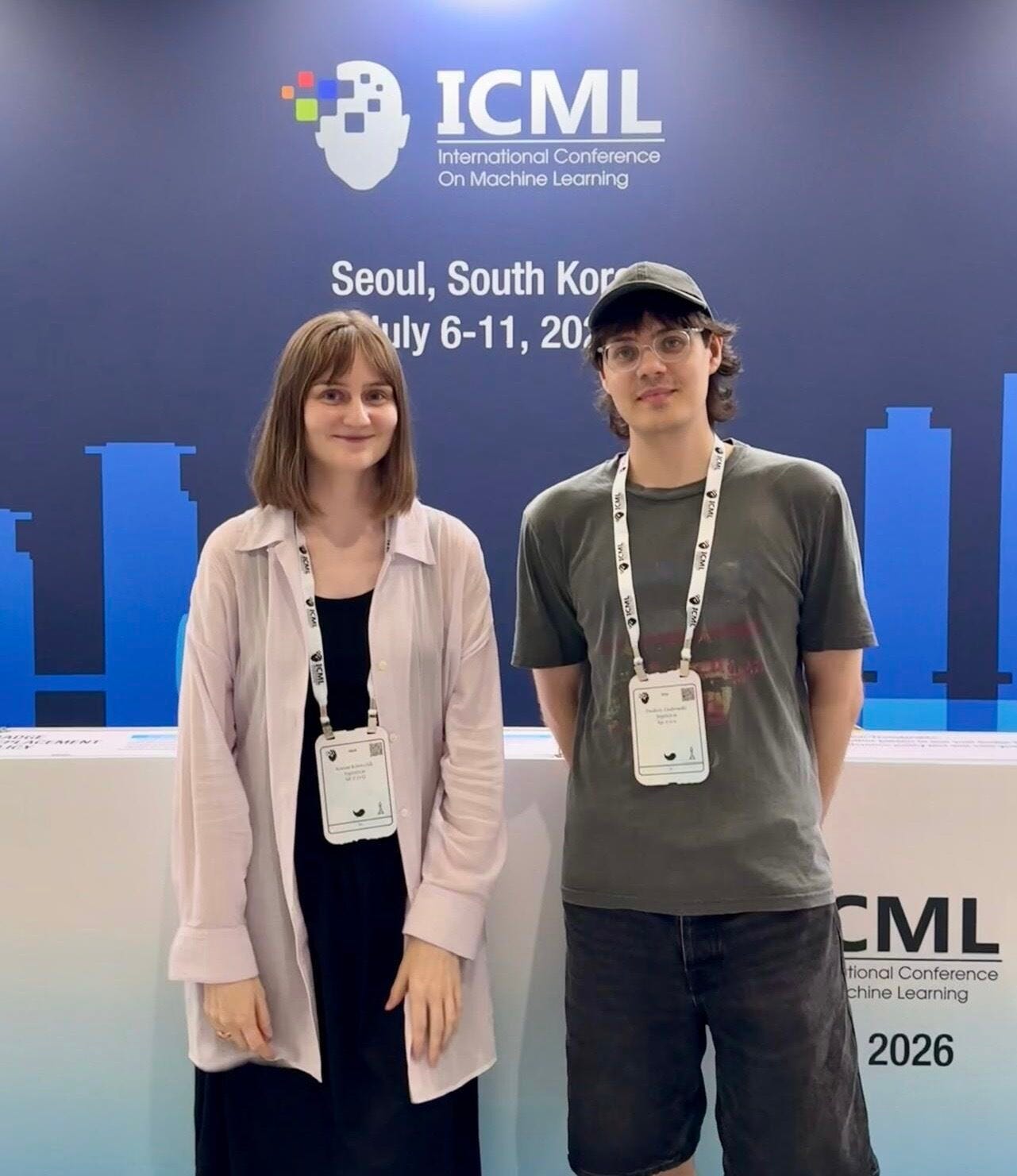
Joanna Krawczyk with Frederic Grabowski at ICML 2026 in Seoul, South Korea presenting two papers on multimodal language models for omics and molecular reasoning:
🧬 OmicsLM: A Multimodal Large Language Model for Multi-Sample Omics Reasoning
🧪 Bolek: A Multimodal Language Model for Molecular Reasoning